
Kerikeri’s pre-European to modern day history is filled with a bounty of scintillating stories of early life where two cultures learned to live alongside each other and forge the way for early settlement throughout Aotearoa.
Tūhono Kerikeri Facebook page, 4 September 2019
In our call for submissions for our proposed Kerikeri anthology, Pavlova Press hopes for stories and poems that reflect this history, and that can sit alongside contemporary tales and odes and speculations about the future. We are looking for diversity and balance, works written te reo Māori and te reo Pākehā, about good times and bad times, that celebrate and question.
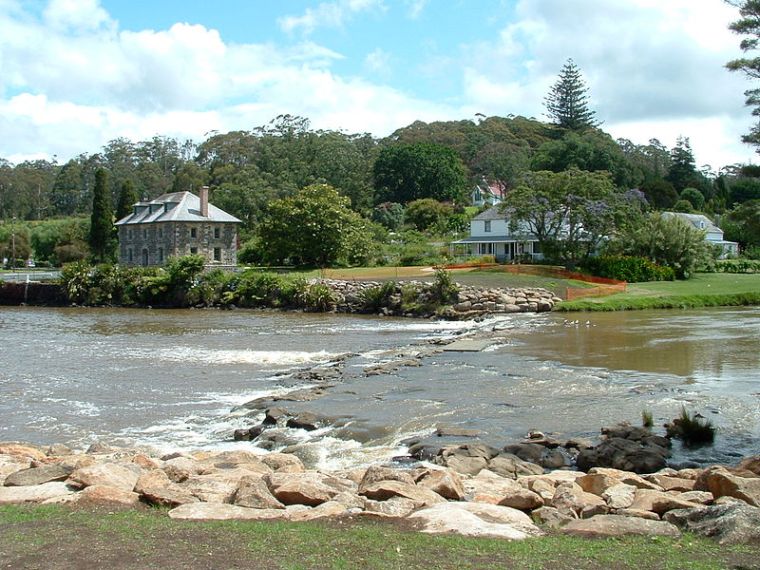
We have taken snippets from Nancy Pickmere’s Kerikeri: Heritage of Dreams (2nd ed., 2008), and the Rewa’s Village website that might stimulate your creativity.
- Kerikeri was of great importance to Ngai Tawake because it was their port/access to the site of their main pa at Te Waimate where they maintained valuable and productive gardens.
- Koropiro Pā, located strategically at the junction of the Wairoa and Kerikeri rivers, was the major gathering place for the departure of hundreds of warriors and laden canoes.
- Ngāpuhi used a sophisticated communications system of fire and smoke, conches and drums, and fast-running messengers to alert villages of unusual activity.
- Three powerful chiefs are connected with early European settlement in Kerikeri: Rewa, Hongi Hika and Tāreha.
- Gravel (kirikiri) dug from the riverbed was used to warm the soil in the cultivation of kūmara crops. It may have provided the name ‘Kerikeri’.
- There was a lack of trees on the site of the missionary settlement—first seen as an advantage because clearing the land would be easier, however the lack of timber was a handicap when it came to building. As an example of the measures needed, at one point a waka towed a loaded whale boat which towed a punt loaded with timber which itself towed a raft of logs.
- The lack of a reliable food supply contributed to a serious discord among the missionaries in 1823, and eventually the Rev. John Butler (the first superintendent of the New Zealand Mission) resigned his superintendency in frustration, having failed to prevent the trading of food to whaling ships in exchange for muskets.
- In December 1829 seven boatloads of people were paddled up the inlet from Paihia to witness the school examinations—boys exhibited their carpentry and girls their sewing.
- The Stone Store, in 1867, had the reputation of ‘Church Missionary Grog-shop’.
- In the early 1900s, gorse was a significant ingredient of chaff—local people collected the seed and sold it to Manako Station (a large cattle and sheep farm) where it was planted, harvested, cut, and mixed with oats—until its luxurious growth started threatening more favoured plants.
- In the 1930s a shortage of tung oil in China was seen as a great opportunity for New Zealand to grow tung trees and Kerikeri was selected as a nursery area. It was promoted as an easy profit crop, with ‘no pests, no pruning, no spraying’ required and the nut being simply picked up off the ground after it falls. Unfortunately, of the 4,548 acres of tung trees north of Auckland in 1938, 733 consisted of ‘unsatisfactory trees’ and 3,760 of ‘worthless, dead and dying trees’.
- The triangle of land formed by Hobson Ave and Kerikeri and Cobham Roads, once used as an occasional pasture for the policeman’s horse, was sold to the County for a car park—a much criticised transaction because of the belief that Kerikeri would never need such an amenity.
- The local library service was started in 1938 and was variously housed in the general store, Yendell’s Bakery (there were complaints about crumbs on the books), Hewson’s shoe shop, Larkin’s milk bar, and the Plunket Society rooms, before being given its own building (originally the old Pungaere school house) on the Domain in the early sixties.
- In 2006 a number of taonga were uncovered during riverbank stabilisation works undertaken as part of the construction of the Kerikeri Heritage Bypass
There have certainly been some interesting happenings in and around Kerikeri! We hope these examples get the creative juices flowing. We are looking for poetry, fiction and non-fiction. Submissions are open to anyone who has a connection—no matter how slight—to the Kerikeri area. For full details visit our submissions page.


 Pavlova Press